

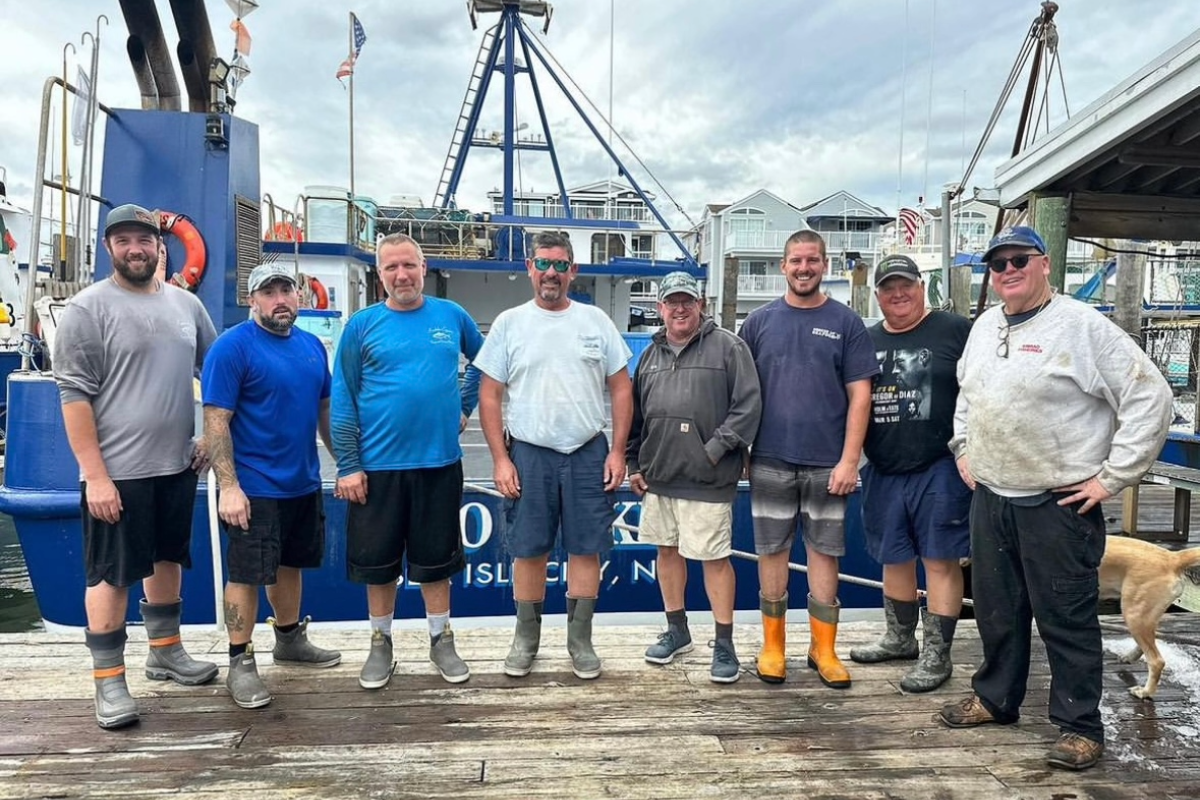
The Blue Water Fishermen’s Association (BWFA) convened its annual meeting over the weekend in Alexandria, Virginia. But what exactly is BWFA? It represents a membership comprising U.S. Atlantic pelagic longline (PLL) fishermen who target highly migratory species of fish (HMS), such as tunas and swordfish, across the Atlantic, Gulf of Mexico, and the Caribbean Sea. The association also includes fish dealers and other shoreside enterprises linked to this fishery in numerous fishery-dependent communities along the coast.
The meeting, spearheaded by BWFA President Marty Scanlon, who owns and operates the FV Provider II, along with legislative consultant Glenn Delaney, saw the participation of VP Jason Bahr from Kashiko Exports, fishermen from various coastal regions, seafood dealers, and shoreside businesses associated with the PLL fishery. Notable attendees also included several members of the National Oceanic and Atmospheric Administration (NOAA)’s fishery management team, including Kelly Denit, Director of the Office of Sustainable Fisheries, as well as Congressman Gregory F. Murphy, M.D., who offered potential assistance in their endeavors.
Marty Scanlon set the tone for the meeting with his opening remark, highlighting the existential struggle faced by the fishery: “We are fighting for our survival as a fishery.” This statement isn’t an exaggeration. Since 2000, the U.S. PLL fishery has witnessed an alarming 80% reduction in vessel participation. Key species like swordfish, yellowfin tuna, and bigeye tuna have experienced staggering declines in landings—64.5%, 60.1%, and 36.5%, respectively. Despite NOAA’s assertion that 97% of all U.S. species are not overfished and are in good condition, the same cannot be said for the fishermen who harvest them to feed the world.
So, how did the meeting unfold? It’s always challenging to provide a straightforward answer, especially when dealing with government officials. However, clarity may emerge soon with the imminent arrival of Amendment 15. This amendment introduces a provision that would impose a 20% charge on PLL fishermen’s catch for utilizing government-mandated cameras to monitor interactions with bluefin tuna- a measure that could exacerbate the already considerable financial burden of PLL fishery regulations. With so much at stake and uncertainty looming, BWFA and Kashiko remain resolute in their commitment to sustain the fishery, supported by their allies and customers.

