Bigeye Tuna
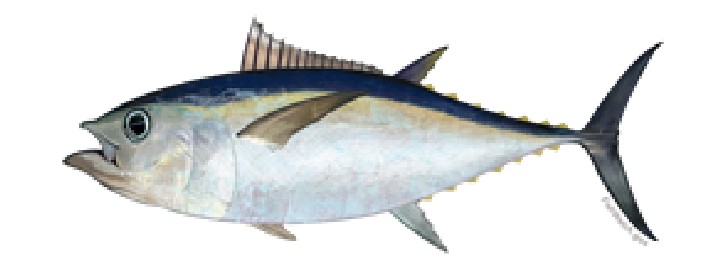

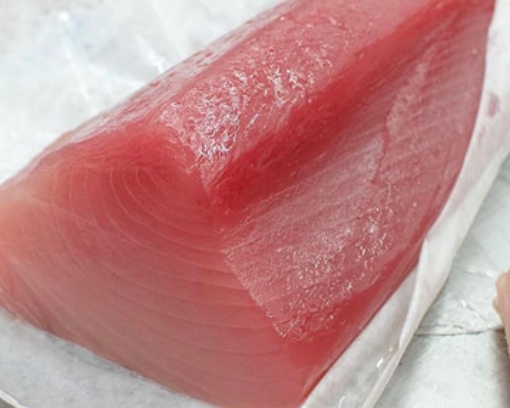
Bigeye tuna is a highly migratory species. They typically arrive for US fishermen in the early summer and remain through the fall, making peak availability between September and November. Bigeye tuna meat has a reddish-pink color typically with a higher fat content and is preferred by sashimi lovers. According to the International Commission for the Conservation of Atlantic Tunas (ICCAT,), the Atlantic bigeye tuna has been managed under a rebuilding plan since 1999. Scientists have determined in the latest stock assessment that the bigeye tuna stock is not overfished. The United States accounts for less than 1% of the global Atlantic bigeye tuna harvest. “New York” Bigeye is regarded internationally as one of the highest-quality tuna sashimi in the world.
NOAA Fish Watch cites that, “U.S. wild-caught Atlantic bigeye tuna is a smart seafood choice because it is sustainably managed and responsibly harvested under U.S. regulations.”
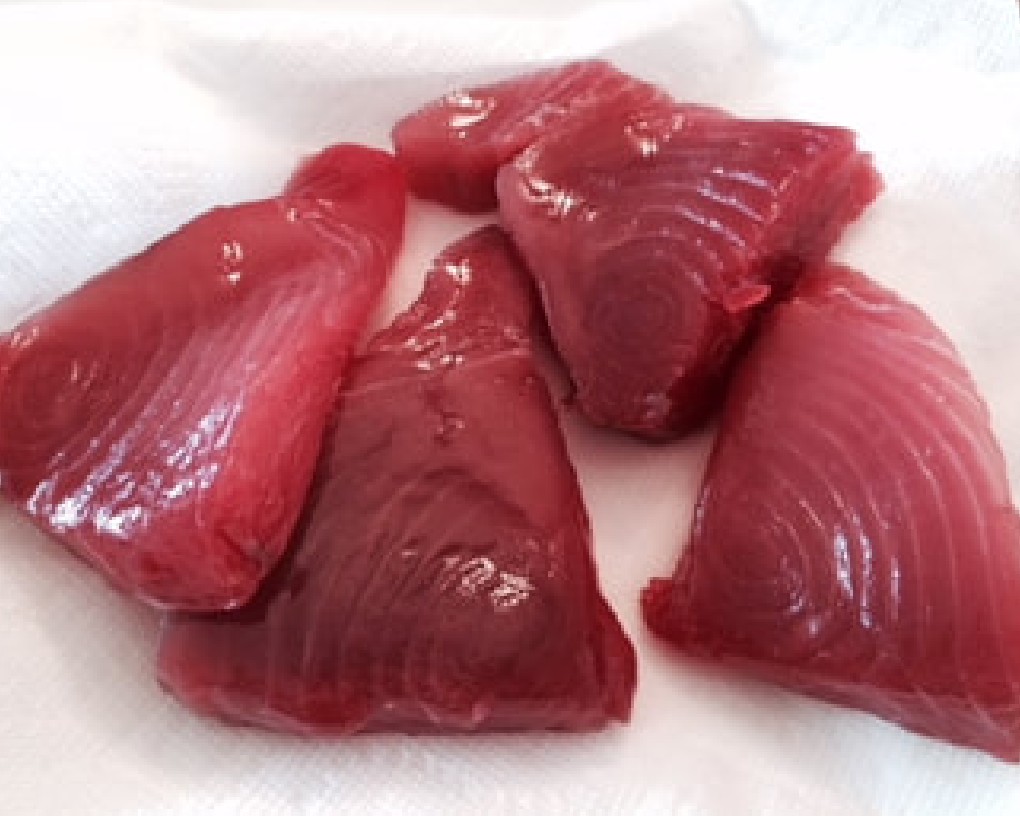


Bluefin Tuna
Thunnus thynnus
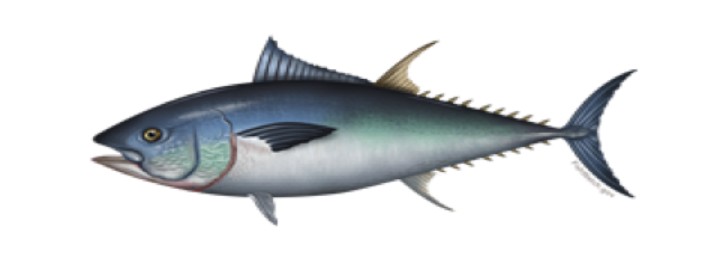
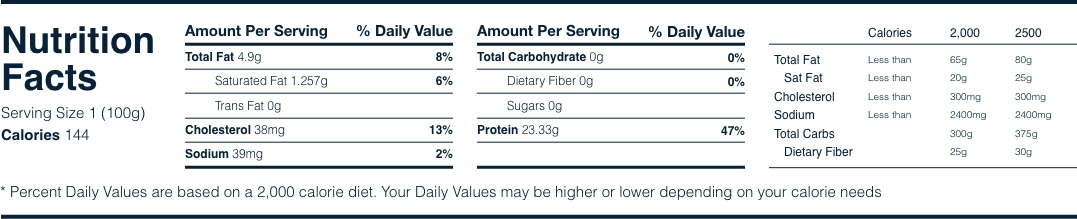
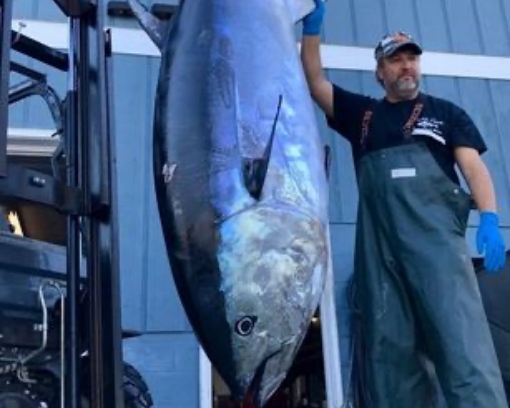
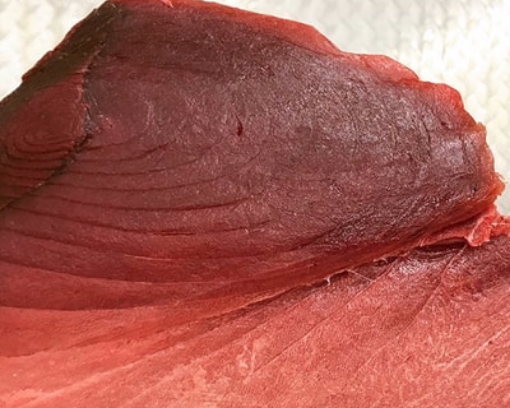
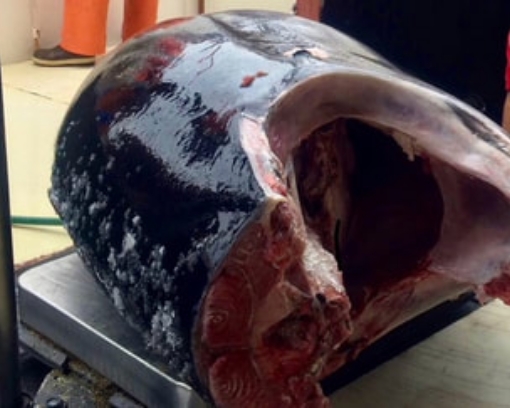
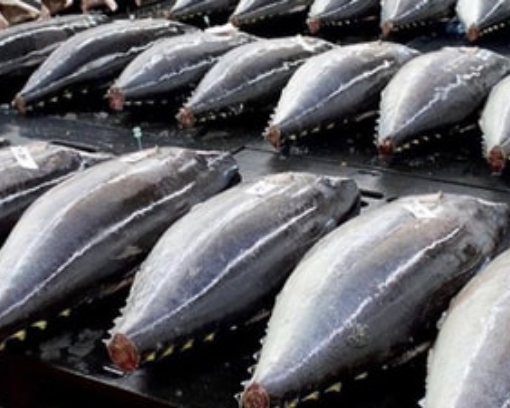
Northern, or Atlantic, Bluefin tuna live throughout the entire North Atlantic and its adjacent seas including the Mediterranean. Bluefin tuna are a highly migratory species and can migrate thousands of miles across an entire ocean. The Bluefin tuna has a large, torpedo-shaped body that is nearly circular in cross-section and can reach up to 13 feet and 2,000 lbs. Bluefin tuna are dark blue-black on the back and white on the lower sides and belly with dark and fatty flesh. Because of its high fat content, Bluefin tuna is especially prized for sushi and sashimi.
NOAA Fish Watch cites that, “U.S. wild-caught western Atlantic bluefin tuna is a smart seafood choice because it is sustainably managed under a conservation and management plan that allows limited harvest by U.S. fishermen.”
Yellowfin Tuna
Thunnus albacares
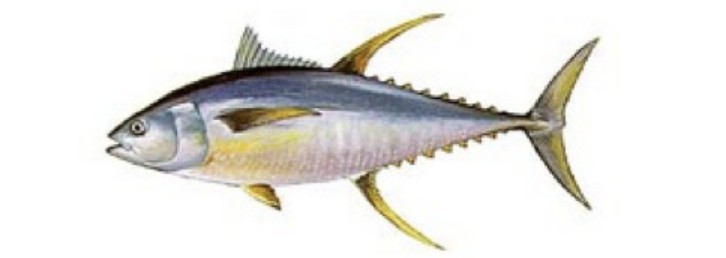

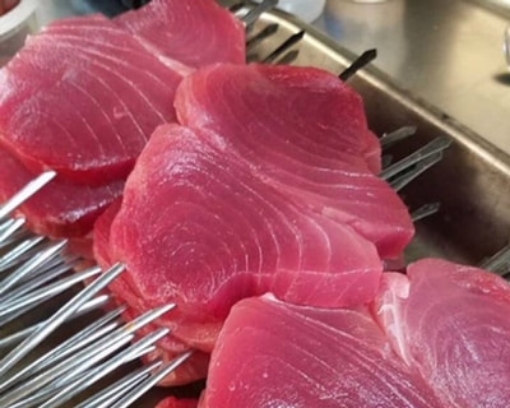
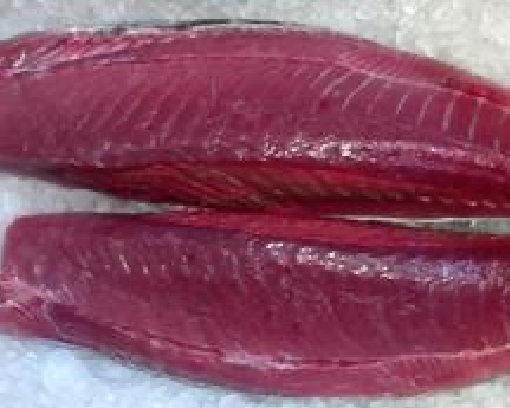
Yellowfin tuna is found near the surface of tropical and subtropical oceans around the world. They are highly migratory and can swim across an entire ocean. Yellowfin tuna grow fast, up to 400 lbs. and have a short lifespan of about 7 years. Most yellowfin tuna can reproduce when they reach age 2 or 3. Yellowfin are torpedo-shaped with metallic dark blue on the back and upper sides and a range from yellow to silver on the belly. True to their name, their dorsal and anal fins and finlets are bright yellow. Yellowfin has a mild, meaty flavor. The meat is bright red when raw but turns brown to grayish-tan when cooked. The meat is firm and moist, with large flakes, and is often served raw as sashimi and in sushi. While Yellowfin is available year-round, peak availability is during the summer and fall.
NOAA Fish Watch cites that, “U.S. wild-caught Atlantic yellowfin tuna is a smart seafood choice because it is sustainably managed and responsibly harvested under U.S. regulations.”
Albacore Tuna
Thunnus alalunga
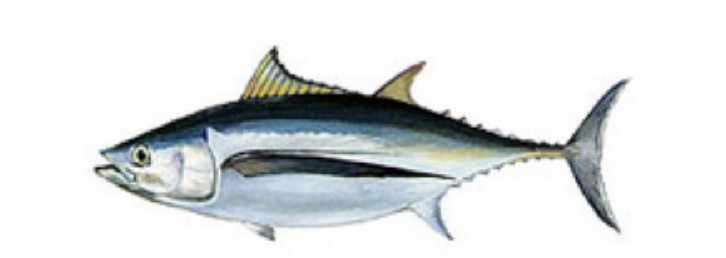

Albacores are a highly migratory species and swim long distances throughout the oceans. They have torpedo-shaped bodies, smooth skin, and streamlined fins. Albacore has a mild, rich taste with a firm texture and large, moist flakes. It has the most omega-3 fatty acids of all of the tuna species. Albacore has the lightest colored meat of all tuna, ranging from light beige to almost brown when raw but becoming off-white when cooked. When canned, it is the only tuna meat allowed to be labeled as “white meat.” Peak availability for albacore is in the fall but they are typically available year-round.
NOAA Fish Watch cites that, “U.S. wild-caught North Atlantic albacore tuna is a smart seafood choice because it is sustainably managed and responsibly harvested under U.S. regulations.”
Swordfish
Xiphias gladius
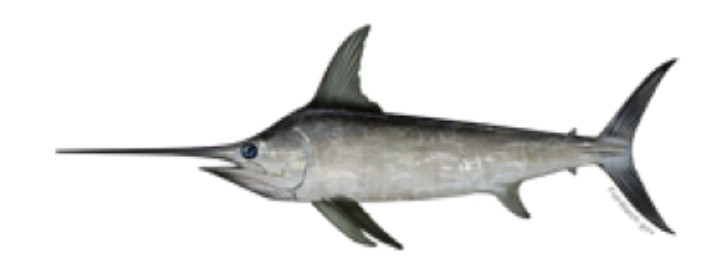
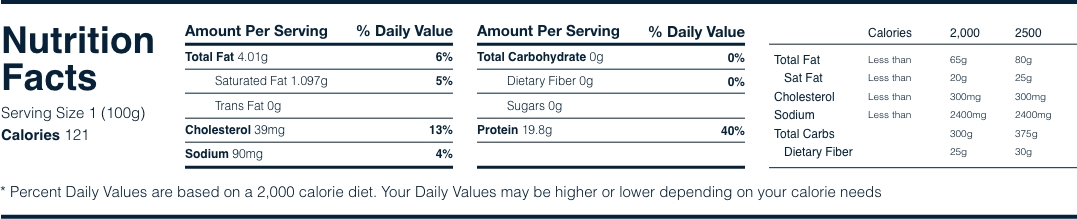
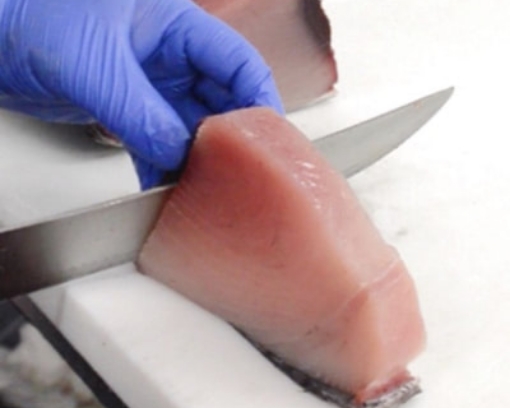
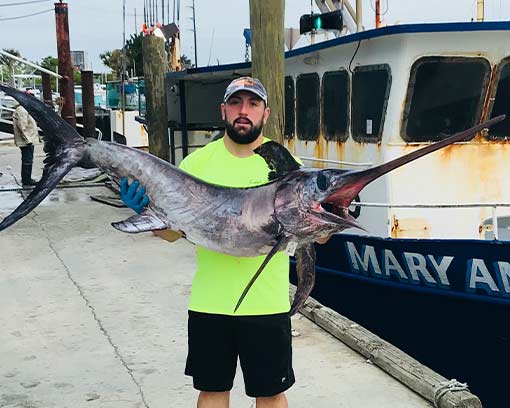
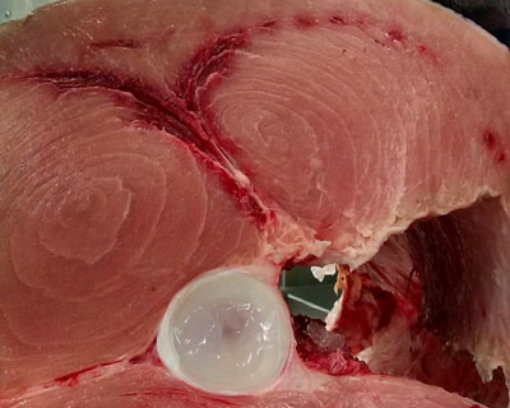
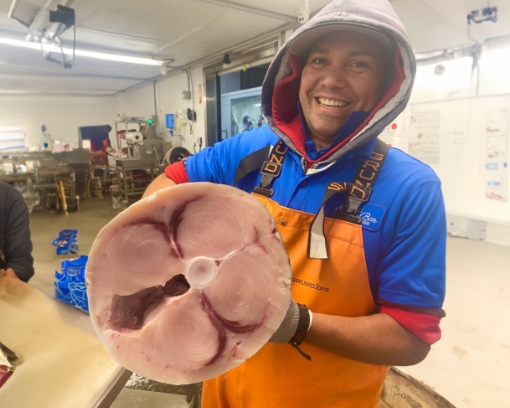
Swordfish are found around the world in tropical, temperate, and sometimes cold waters of the Atlantic, Indian, and Pacific oceans. Swordfish have a long, flattened bill that looks like a sword. They have a stout, rounded body and large eyes. Their first dorsal fin is tall and crescent-shaped, while the second is much smaller. Their anal fins are similar in shape to the dorsal fins but are smaller in size and their tail is broad and crescent-shaped. Their color is darkest on top, generally black or brown, and fades to a lighter color below. Swordfish is available year-round and is moist and flavorful with a slightly sweet taste. It has moderately high oil content and a firm, meaty texture. When raw, the flesh varies from white and ivory to pink and orange. When cooked, swordfish turns beige and is an excellent source of vitamin B12 and Zinc.
NOAA Fish Watch cites that, “U.S. wild-caught North Atlantic swordfish is a smart seafood choice because it is sustainably managed and responsibly harvested under U.S. regulations.”
Mahi Mahi
Coryphaena hippurus
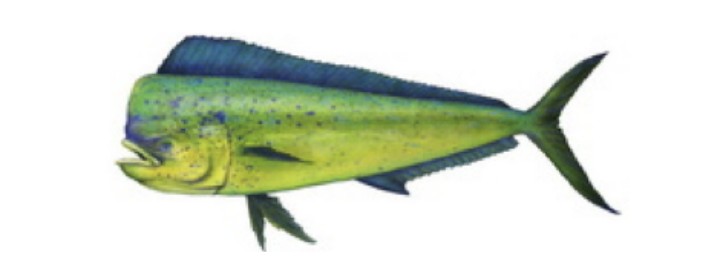

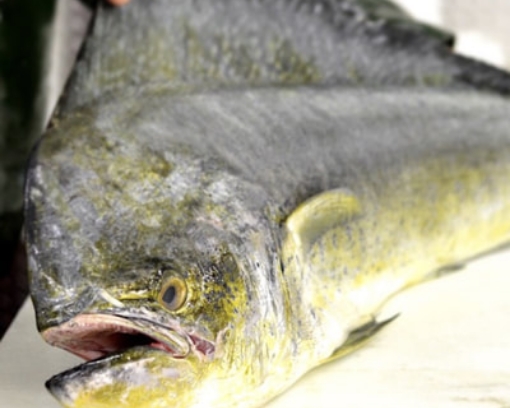
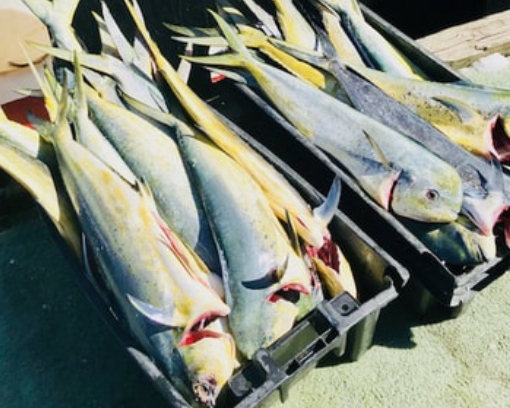
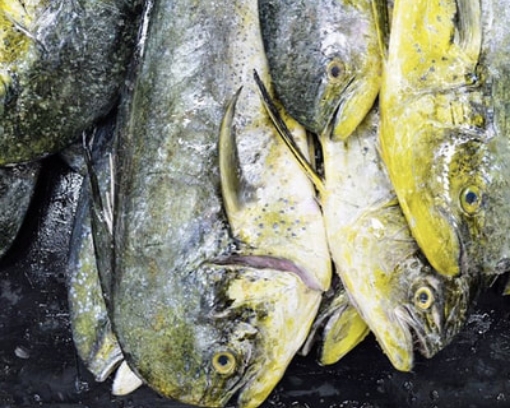
Mahi Mahi live near the surface in tropical and subtropical waters around the world. With a quick growth rate of up to almost 7 feet and 88 lbs. and a short life span of up to 5 years, Mahi Mahi are able to reproduce at 4 to 5 months old. They are brightly colored fish with a greenish-blue back, gold or silver lower body, and spotted sides. Mahi Mahi has a sweet, mild flavor and is a good source of vitamins B6, B12, and potassium. Peak availability for Mahi Mahi is from April through June.
U.S. wild-caught mahi mahi is a smart seafood choice because it is sustainably managed and responsibly harvested under U.S. regulations.
Opah
Lampris guttatus, Lampris spp.
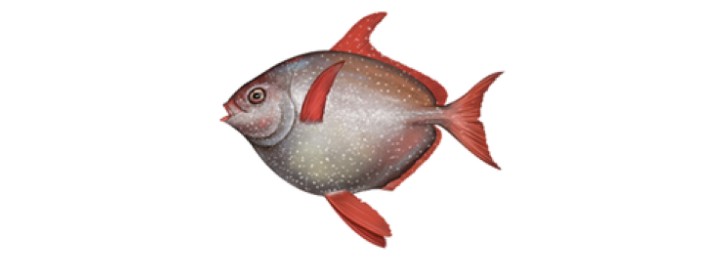
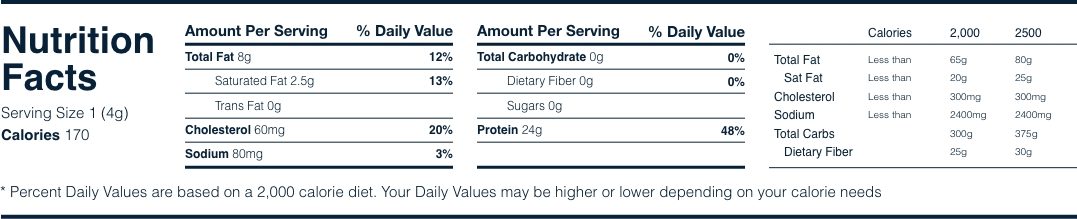
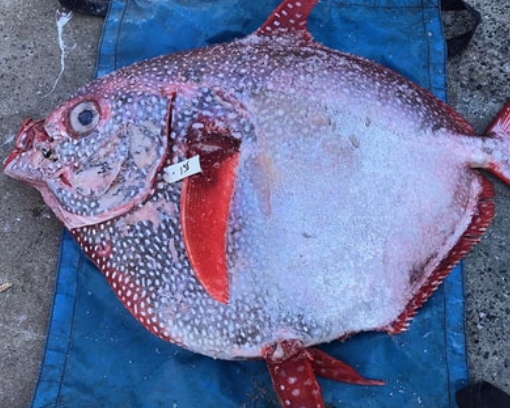
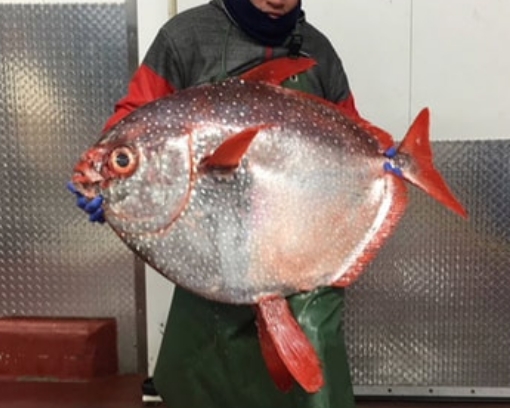
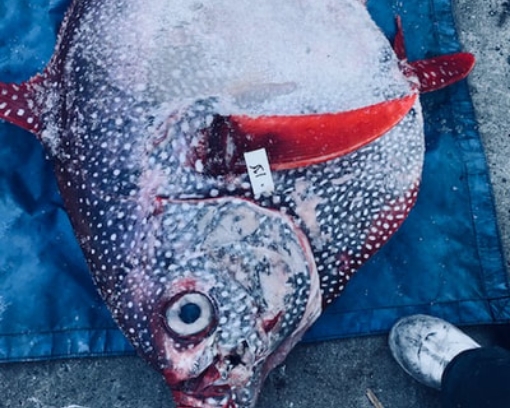
Opah live in deep ocean waters and are capable of traveling long distances in response to changing oceanic conditions such as temperature. Opah has a round, flat body that is grey with a white spotted rose-red belly and red fins. Opah has a few types of flesh, each a different color: tender meat behind the head and along the backbone which is orange in color, flesh toward the belly which is pale pink, and red cheeks. Opah has a rich, creamy taste and a firm, fatty texture. Opah is low in sodium and high in vitamins B6 and B12.
NOAA Fish Watch cites that, “U.S. wild-caught opah is a smart seafood choice because it is sustainably managed and responsibly harvested under U.S. regulations.”
Wahoo
Acanthocybium solandri
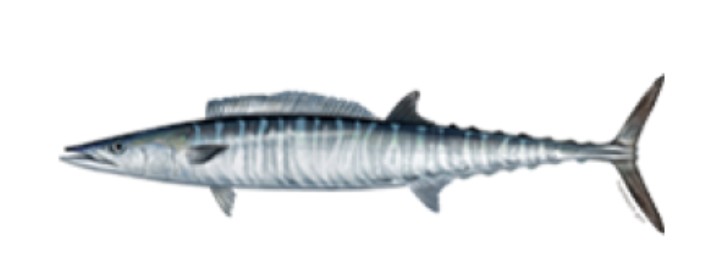
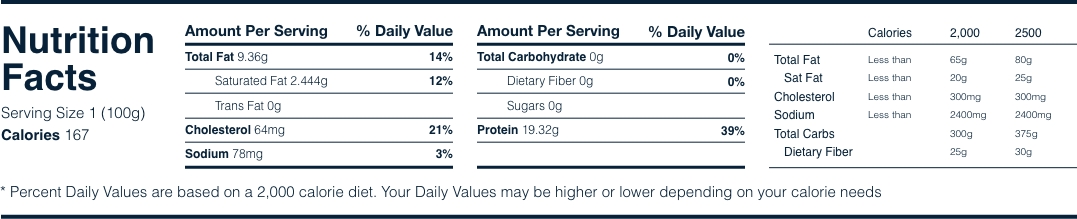
Wahoo are found near the surface in tropical and subtropical waters year-round but are also found in higher latitudes during the summer Wahoos grow quickly up to 8 feet long and 158 lbs. They have a short life span of 5 to 6 years and can reproduce at about a year old. Wahoos are blue on their top side and pale blue on their underside. Wahoo is a lean, mild-tasting fish which is an excellent source of low-fat protein.
NOAA Fish Watch cites that, “U.S. wild-caught Atlantic wahoo is a smart seafood choice because it is sustainably managed and responsibly harvested under U.S. regulations.”
Escolar
Lepidocybium flavobrunneum
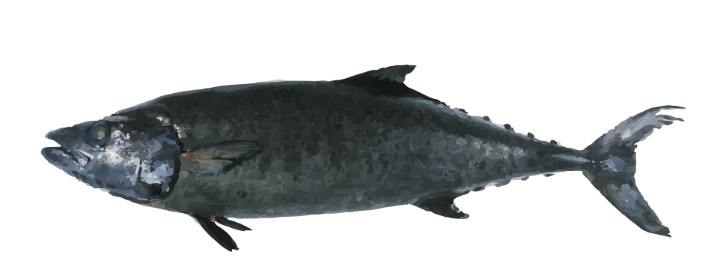
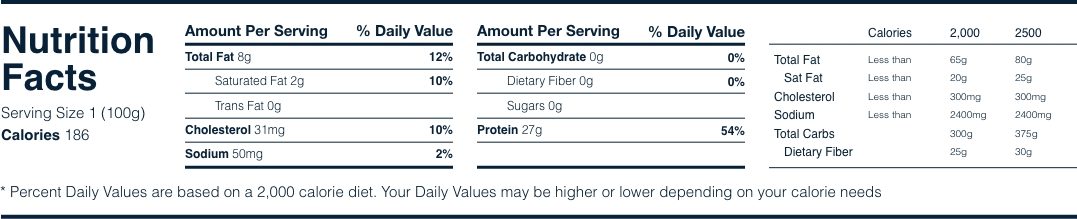
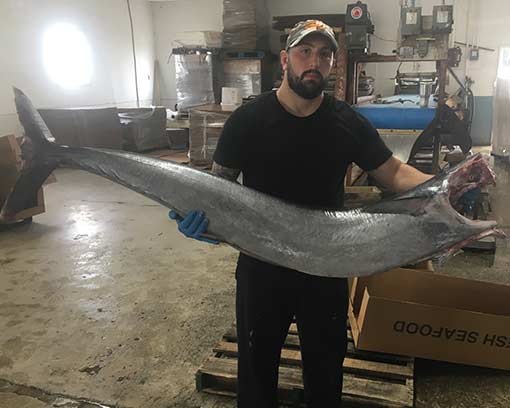
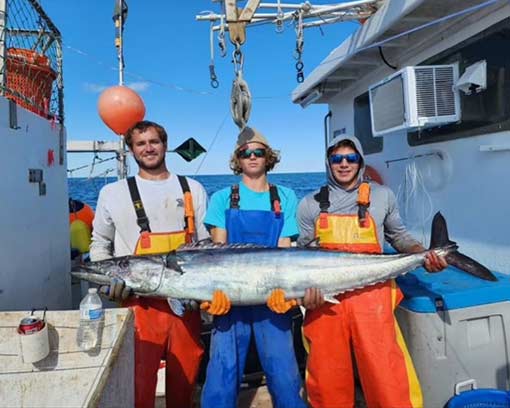
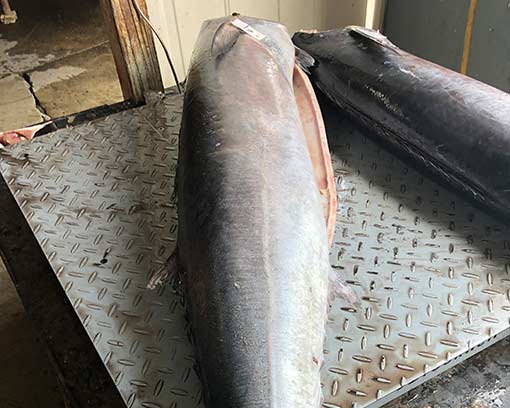
Escolar is commonly referred to as “white tuna” or “oil fish.” They live in the deep waters of the Atlantic. Escolar is a flavorful, oily fish and is an excellent source of vitamin B6 and Magnesium.
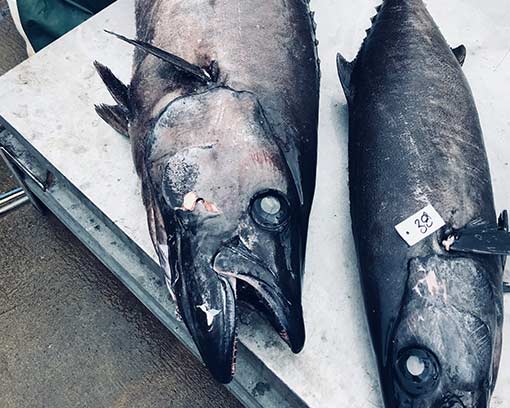
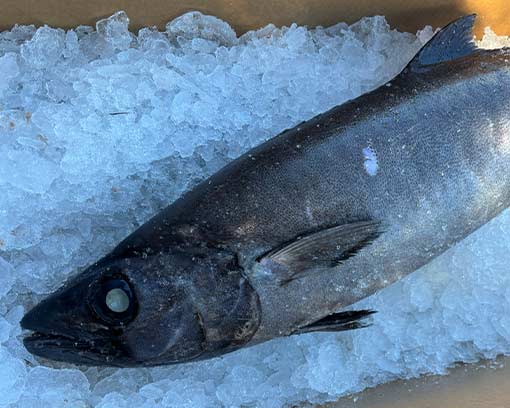
Pomfret
Parastromateus niger
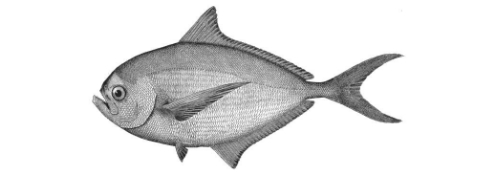
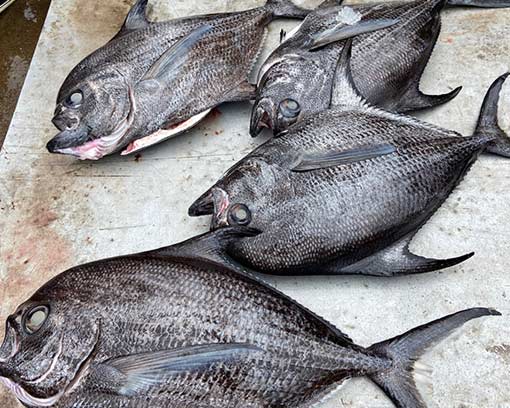
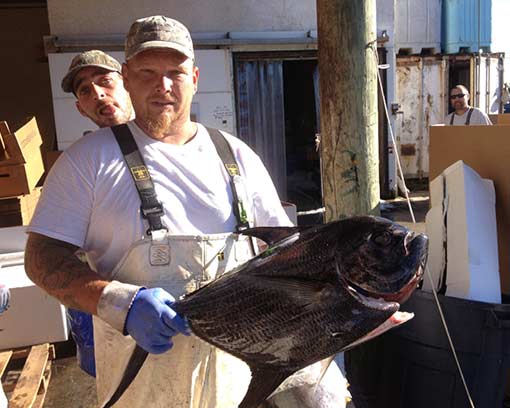
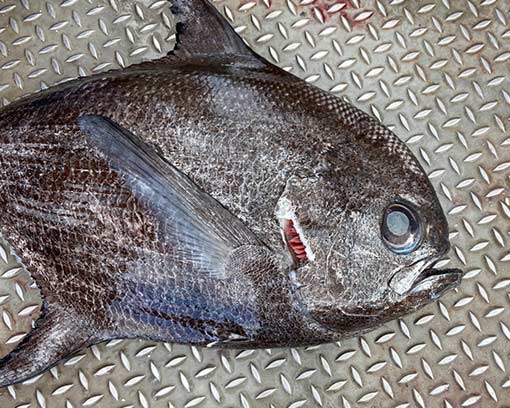
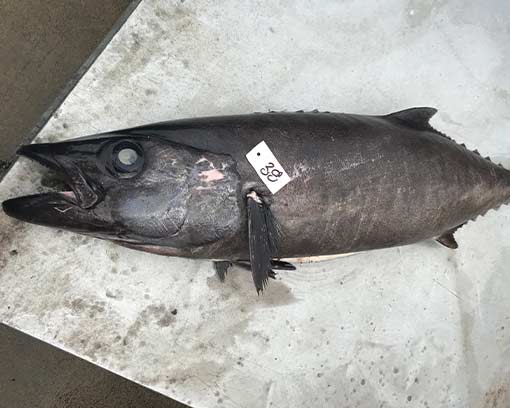
The Atlantic pomfret has very significant migration patterns[4] which greatly depend on the temperature of intermediate waters, but are also affected by secondary reactions from density dependence and the climatic conditions of the surface. Although the species was first recorded in Irish waters in 1843, it was still regarded as scarce up until the late 1950s, but between the 1960s and 1970s large numbers were recorded.